 Webmaster
April 22, 2014
Webmaster
April 22, 2014
OSUN O'MEALS CASE STUDY: Pupils And Farmers Benefit From School Meal Programmes Around The World
 Global leaders met in London earlier this year to discuss how school meal programmes can improve educational outcomes and boost agricultural economies.
The meeting was co-hosted by the All Party Parliamentary Group on Agriculture & Food for Development and the Partnership for Child Development (PCD) from Imperial College London, which is working with governments to build the evidence base and provide technical assistance for the development of effective and sustainable home grown school feeding (HGSF) programmes. HGSF refers to school feeding programmes which procure their food from local smallholder farmers thereby supporting local rather than foreign markets.
In 2013, up to $75billion dollars was invested by the governments of 169 countries into school feeding programmes. It is estimated that for every $1 spent feeding school children, $3 are generated for the local economy.
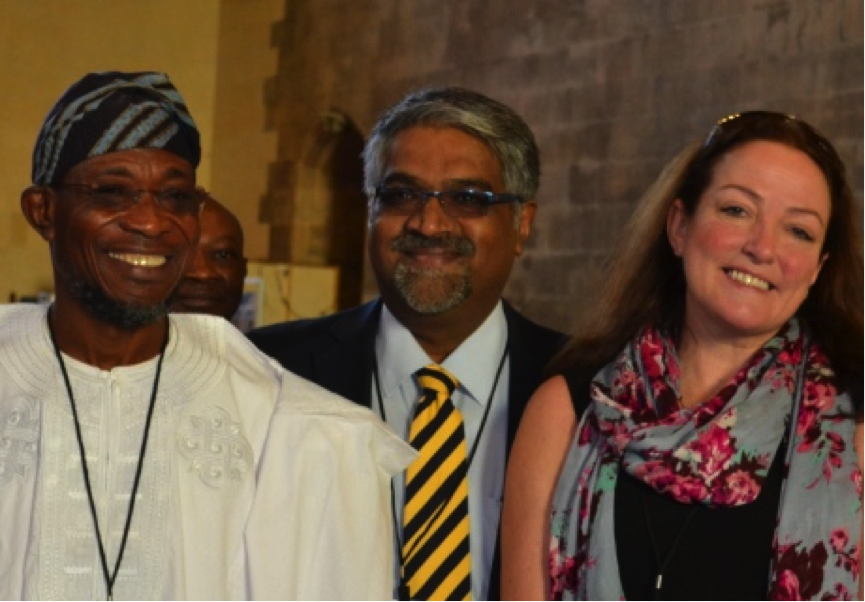
Keynote speaker Rauf Aregbesola, Governor of Osun state in Nigeria, reported on the success of his state’s school meals programme, known as O’Meals, which feeds over 250,000 children every school day. The O’Meals programme provides employment to over 3,000 women and purchases food from over 1000 local farmers.
The experience of Osun tallies with that of governments from across the globe, the World Bank’s Professor Donald Bundy said. He noted that analysis from the influential book, ‘Rethinking School Feeding’ that he co-authored in 2009, had identified that countries were increasingly turning to school feeding programmes as a form of social safety net for their poorest communities. In Europe, in response to the recent recession, countries such as Spain, Portugal, France and the UK had implemented school feeding programmes as means to protect their most vulnerable members of society.
This growth in school meal coverage provides an opportunity for local agricultural economies, Professor Bundy said. “School feeding programmes provide a structured demand for agricultural produce and can, when implemented correctly, encourage wider economic development. Even crisis hit countries such as Cote D’Ivoire, Madagascar, Mali and Sudan are shifting to nationally run programmes which procure their food from local smallholder farmers.”
Speaking on behalf of the African Union’s New Partnership for Africa’s Development, Boitshepo Giyose agreed. “We’re seeing more and more sub-Saharan Africa countries adopting HGSF but they still need support to achieve this. International partners have a vital role to play in promoting cost-effective and sustainable programmes.”
Speaking at the event, PCD’s Executive Director, Dr Lesley Drake said: “Research shows that when properly designed, HGSF programmes can act as a win-win for both schoolchildren and smallholder farmers alike.
“For integrated school feeding programmes to succeed like they have in Osun, governments and development partners alike need to integrate HGSF into their policies, strategies and plans for agriculture and for education.”