 Webmaster
August 9, 2017
Webmaster
August 9, 2017
No Hiding Place For Criminals in Osun
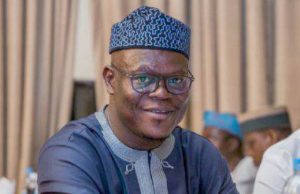
Dr. Ajibola Basiru is Osun State Attorney-General and Commissioner for Justice. In this interview, he discusses the strides taken by the Ogbeni Rauf Aregbesola-led administration in judicial reforms, law and economic development. Legal Editor John Austin Unachukwu met him.
A reformed, modernised legal and judicial sector is a sine qua non to socio-economic and democratic growth. What is the position in Osun State?

Ogbeni Rauf Aregbesola during his electioneering campaign published the ‘Green Book’ titled: ‘My pact with the people of Osun State.’ The Green Book is the manifesto of the Aregbesola administration and in it he made a documented promise that his government will ensure speedy access to justice for all individuals in Osun State by reforming the courts system and procedural rules, introducing alternative dispute resolution (ADR) mechanisms and free legal services.
So, how has he addressed these promises?
Can you give us a sectoral break down of these legal reforms initiatives?
The legal reform initiatives cut across key sectors, including public finance management, revenue generation, education and human capacity development, urban renewal and environment, governance and security, judicial sector reform, health, safety, agriculture and food security and the institutionalisation of social welfare schemes.
What is the philosophy or principles behind these reforms?
The objectives of the legal reform initiatives of the Aregbesola-led administration is to modernise governance, institutionalise good governance practices, facilitate and support investment, improve security and social welfare, promote public good and realise the Six-point Integral Action Plan of the Administration.
Law is seen as a catalyst for economic development. The Nigerian legal regime seems to be different.
How has Osun used laws to improve its peoples’ welfare?
We have done this through a number of bills which we have passed into laws in the state. For instance, the State of Osun Bonds, Notes and other Security Insurance Law which came into force on June 12, 2012, is intended to enable the state issue debt instruments, such as bonds, notes, and other securities and to establish the Consolidated Debt Service Account (CDSA) and Sinking Fund for the management of the debt. By section 1(1) of the Law, the CDSA shall be a Savings account to be fully funded from the 20 per cent appropriated in accordance with section 1 (2) of the Law, this provision authorizes the state to appropriate 20 per cent of the monthly Internally Generally Revenue (IGR) to the servicing of the state’s debt obligations arising pursuant to the Law. The CDSA shall be fully funded in cash equal to the maximum yearly debt service on the tranches series or issue of the debt instruments issued from time to time by the state.
Other laws passed by the state include State of Osun (Omoluabi) Conservation Fund Law 2012, State of Osun Debt Management Office Law 2012, the State of Osun Fiscal Responsibility Law 2012, the State of Osun Revenue Administration Law 2012, Land use Charge Bill 2013, the State of Osun Signage Hoarding and Advertisement Law 2012 and State of Osun Public Private Partnership Bill 2012. All these laws were made to improve the quality of governance and the welfare of the people in the state.
Security of life and property remains one of the country’s challenges. What is the situation in Osun?
Osun is safe for all Nigerians. There is no place for cults and cultism. We have state of the art security surveillance both air and land so there is no place they can hide. We have also deployed enormous resources in ensuring that the police are well equipped and encouraged. On our part, our expert team of lawyers in the ministry of justice conduct their case in a timely and effective fashion to ensure that criminals are brought to book
Many states have adopted the Administration of Criminal Justice Act (ACJA) as their laws to combat crimes in the states. What is the position in Osun?
We have already begun work on the laws of Osun, which was last reviewed in 2002. We have commissioned consultants and recently 44 new laws have been passed while about 20 are pending. Part of the pending laws is the Administration of Criminal Justice Law. Making law is always an ongoing process, what we are currently focusing on is developing capacity within the Judiciary for the speedier dispensation of Justice. We have to realise that the Police and the Nigerian Prison Service play a vital role in this regard and unfortunately we have no real say or authority over those institutions but we are trying our best to work with them to ensure that we decongest our prisons and prosecute the right people. The Chief Judge of Osun State is reviewing the Civil Procedure Rules which will further ensure that there is quick dispensation of Justice is both civil and criminal matters.
Alternative Disputes Resolution (ADR) mechanisms seem to be gaining popularity, especially in commercial transactions. What is your view on this?
Osun State has a mediation centre as well as an office of the public defender. The Mediation Centre has helped in reducing the amount of cases pending before the regular courts. This is a service that the government has provided at no cost to its people. Since 2012, over 250 cases have been resolved while another 120 are still ongoing.
There have been calls for judicial autonomy. What is the position in Osun?
There are serious infrastructural challenges that the Judiciary faces but we must look at it from the point of view that even though we have three arms of government, they are not totally independent of each other and they are there to complement each other. The Executive cannot give the Chief Judge allocation to build courts, it is the job of the executive to execute projects. So to give the Judiciary all it needs to build its infrastructures etc. is not the way it works. This is not to say that the Judiciary should not be well funded, on the contrary, the Judiciary should be well catered for as it will encourage more local and foreign investments and that is why we are working hard to ensure that the judiciary is restructured
Many states have passed anti-open grazing laws to checkmate conflicts between cow breeders and local farmers. What is the position in Osun?
The issue of grazing is cultural. In Osun we have invested heavily in setting up a cow-fattening facility to maximise on the production of milk and cow flesh which is the real value in the feeding of these cows in the first place. We don’t want animals running around. That is not the way to go about it. We need to resolve this issue from a socio-economic point of view but if the National Assembly continues along this path we will have to test the constitutionality of the bill at the Supreme Court if the bill passes into law.
Payment of civil servants is a major challenge for the Osun government. What is responsible for this?
It is my sincere belief that this is a fallout of the declining economy, the fall in the price of crude oil and our inability to diversify our economy. We simply have too many bureaucracies, 38 states sharing meagre national resources. We have no viable industries or production capacity. Nigeria needs to radically restructure at the regional level otherwise we will continue to regress. We understand the problem we are having in paying our civil servants and we have called all the stakeholders together in a transparent manner. Each month we show them what we receive from the Federal Government and from our IGR. Armed with this information, the leaders of the various unions have agreed on a new salary scale that is reasonable and reflects the economic situation in the country.